Processed potatoes: how to reduce waste and contamination along the production line
Stones, soil clods, green, rotten or damaged potatoes: every contaminant that reaches the plant means waste, complaints and line stoppages. Here is where to act and which optical sorting technologies to use.
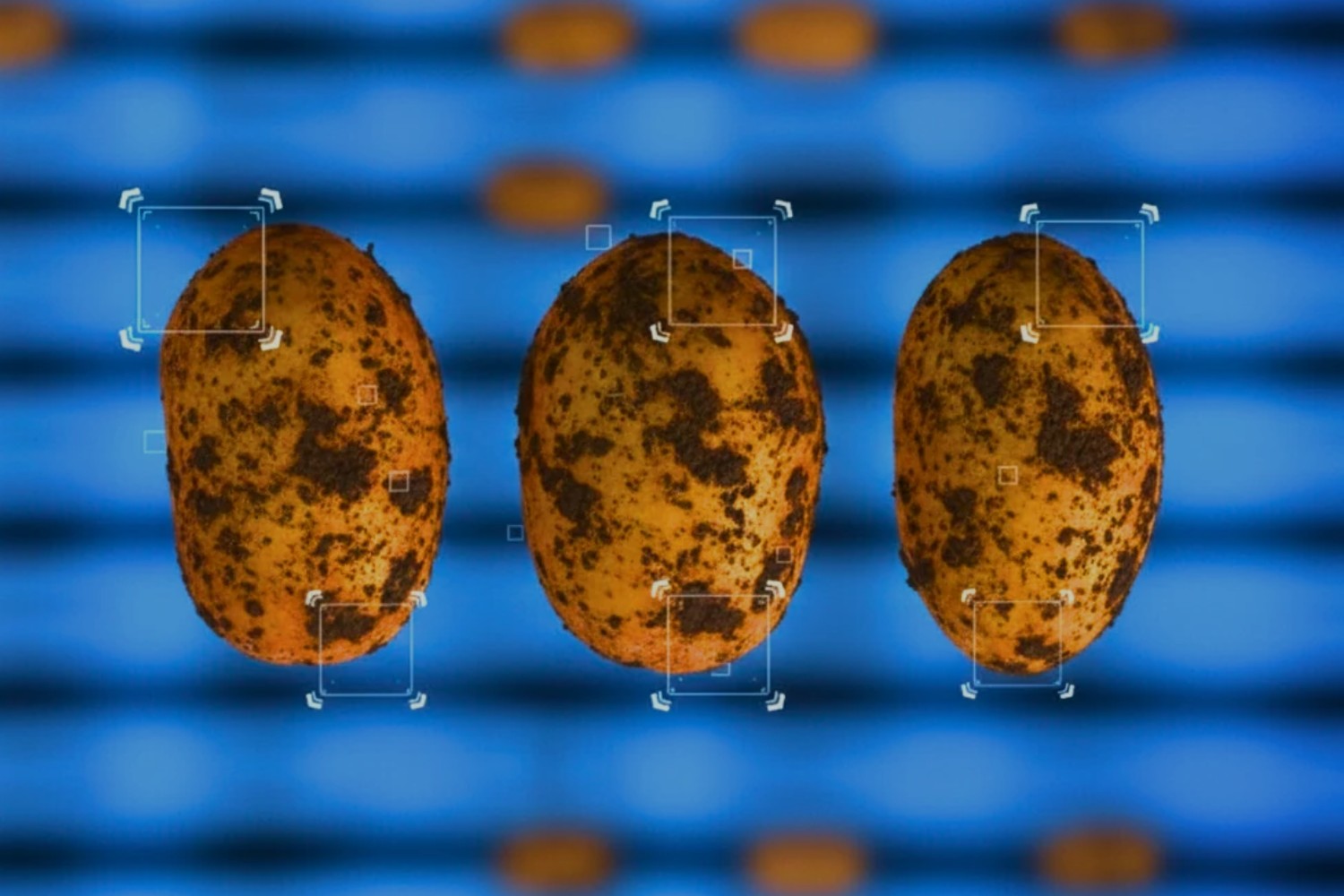
See our sorters in action
Four videos showing our sorters at work, on the farm and in the processing plant: Raynbow and Ingenuity on washed potatoes, Ingenuity and Spiryt on unwashed potatoes.
Why waste and contamination weigh on farms and the processing industry
Potatoes come in from the field with whatever the harvest brings: stones, soil clods, branches, plant debris and, at times, completely unexpected objects such as golf balls. On top of that come unsuitable tubers – green, rotten, damaged, cut or discoloured potatoes. For growers and storers, this means downgraded product and rejected deliveries; for processors, risks to equipment and to the quality of the finished product. If they are not removed in time, the problems build up in three places:
On the farm and in the plant, manual sorting alone struggles to deliver consistent results: it needs a large crew, increasingly hard to find especially at harvest peaks, and attention inevitably drops over long shifts.
Foreign material
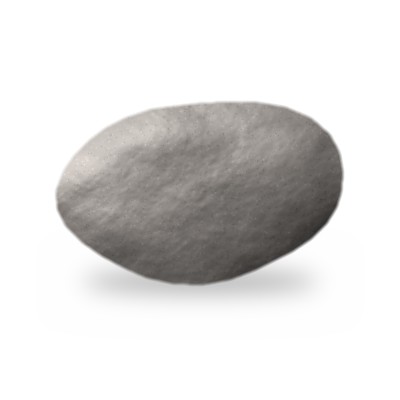 Stone
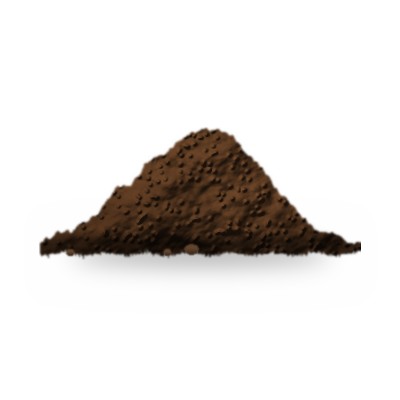 Soil clod
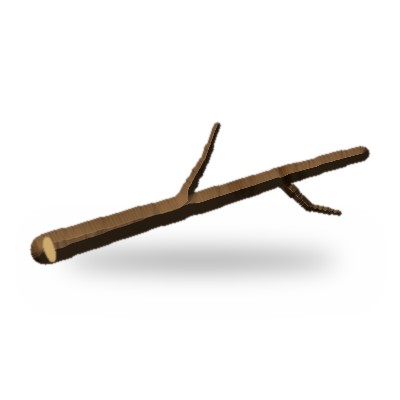 Woods
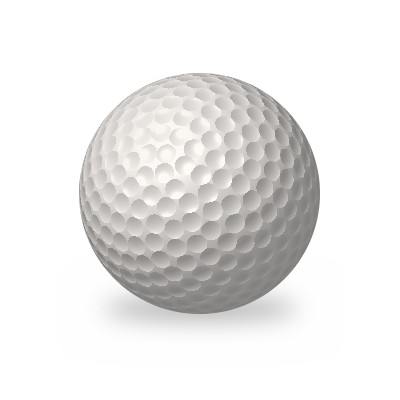 Golf balls
External defects
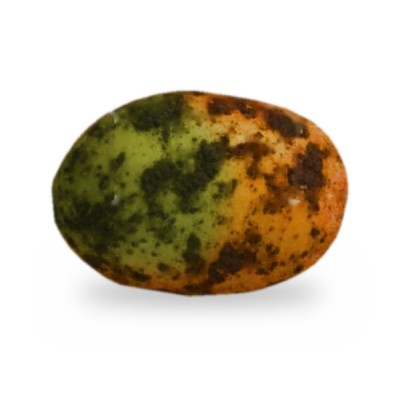 Green potatoes
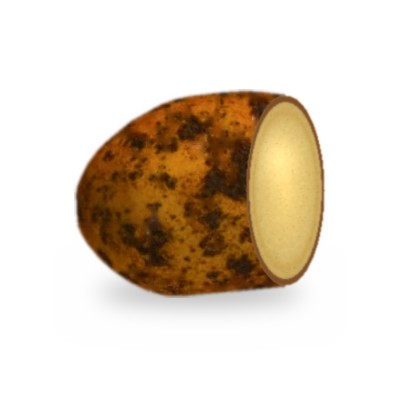 Damaged and cut potatoes
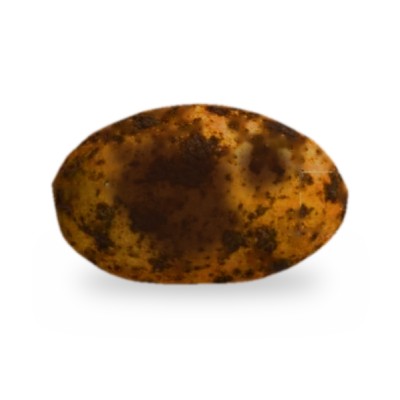 Rot
Internal defects
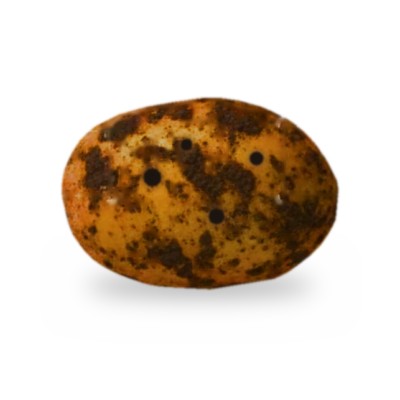 Wireworm damage
External defects, internal defects and foreign material: what to remove
Where to act: from field to processing plant
- On the farm, on unwashed potatoesThe most effective point to remove stones, clods, branches, golf balls, green potatoes and damaged and cut potatoes before storage or delivery to the plant.
- After washingWith the soil removed, rot and colour defects become visible: a second sort, at washing centres or at plant intake, ensures that only compliant product enters processing.
- In the plant, along the processing lineEven on peeled, cut or fried potatoes, optical sorting removes the last defects before packaging.
Raynbow, Ingenuity and Spiryt: which optical sorter to choose
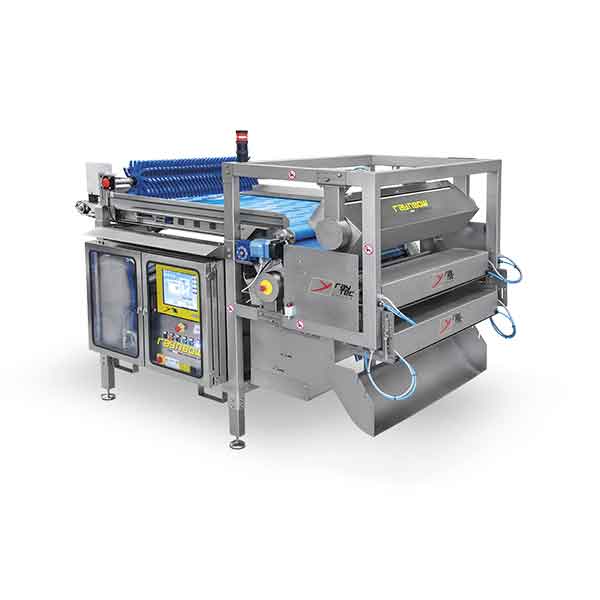
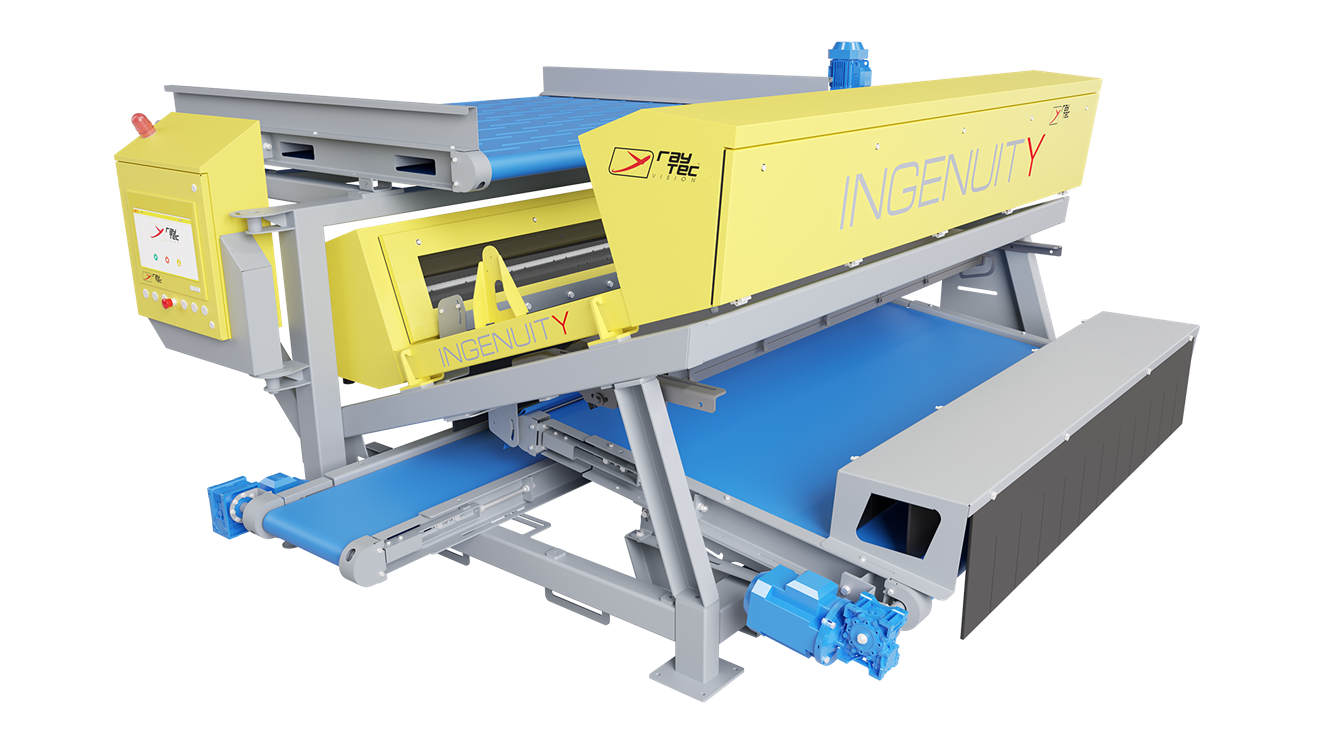
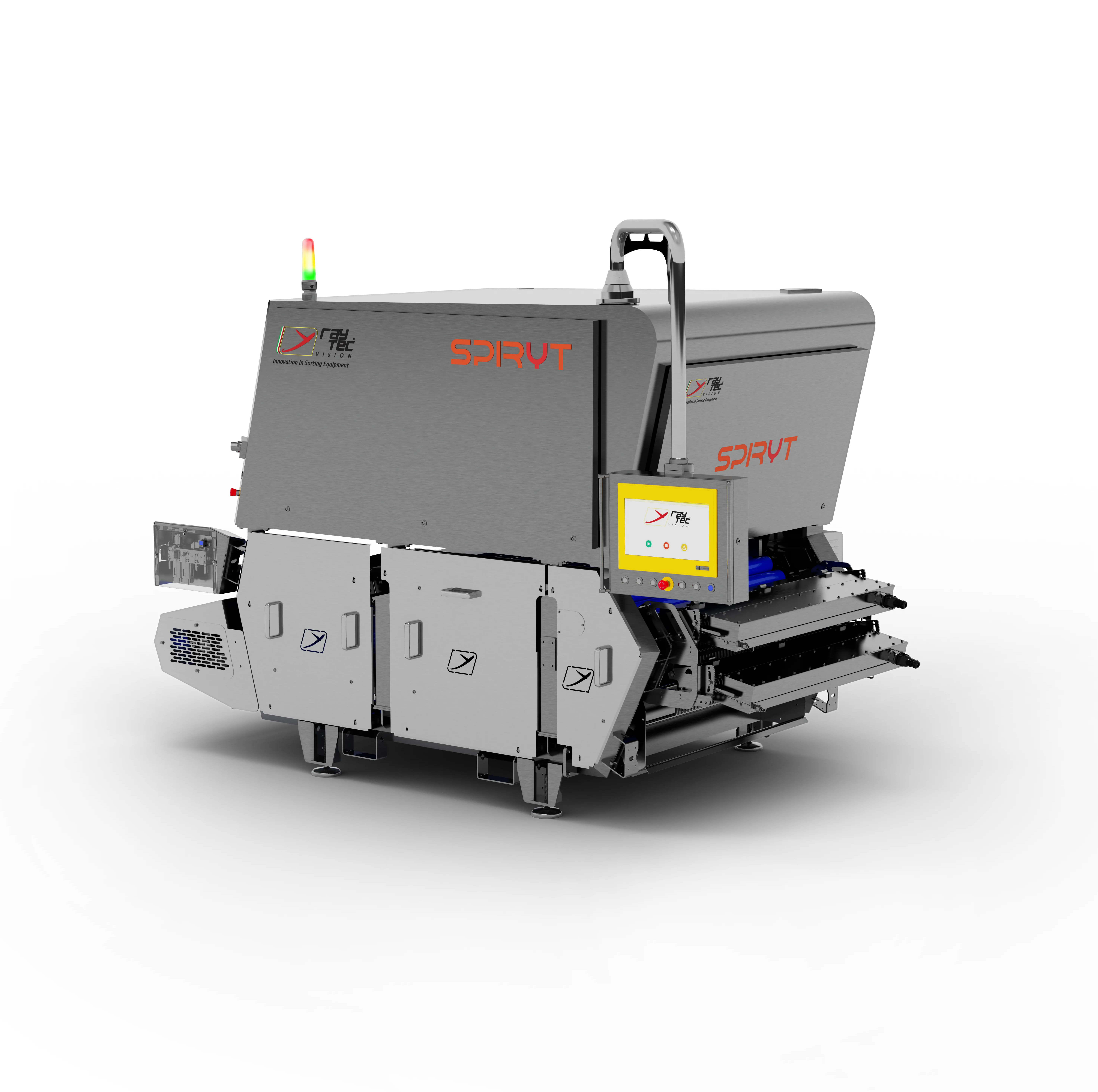
| Raynbow | Ingenuity | Spiryt | |
|---|---|---|---|
| Technology | High-speed dual vision | Visible colour + NIR | Matrix cameras + AI |
| Inspection | 100% of the surface | Dual vision | 360°, with product rotation |
| Product | Washed and unwashed | Washed and unwashed | Washed and unwashed |
| Ideal for | Farms and packing centres | Large farms and processing plants, very dirty product | Maximum defect accuracy, on the farm and in the plant |
Fewer complaints and fewer rejected loads
Complaints almost always stem from inconsistency: a perfect batch followed by one with too many defects or a piece of foreign material. Automatic sorting applies the same criteria every shift, on every potato, and delivers a cleaner, more uniform product.
For farms, that means fewer loads rejected by processing plants; for processors, fewer customer complaints, less rejected product and stronger relationships with retailers.
Production continuity, on the farm and in the plant
- Protects downstream equipment by removing hard foreign material, from storage to processing.
- Reduces labour needed on the sorting line, even at harvest peaks.
- Shortens sorting shifts.
- Requires little maintenance and allows remote support.
Two farms, one goal
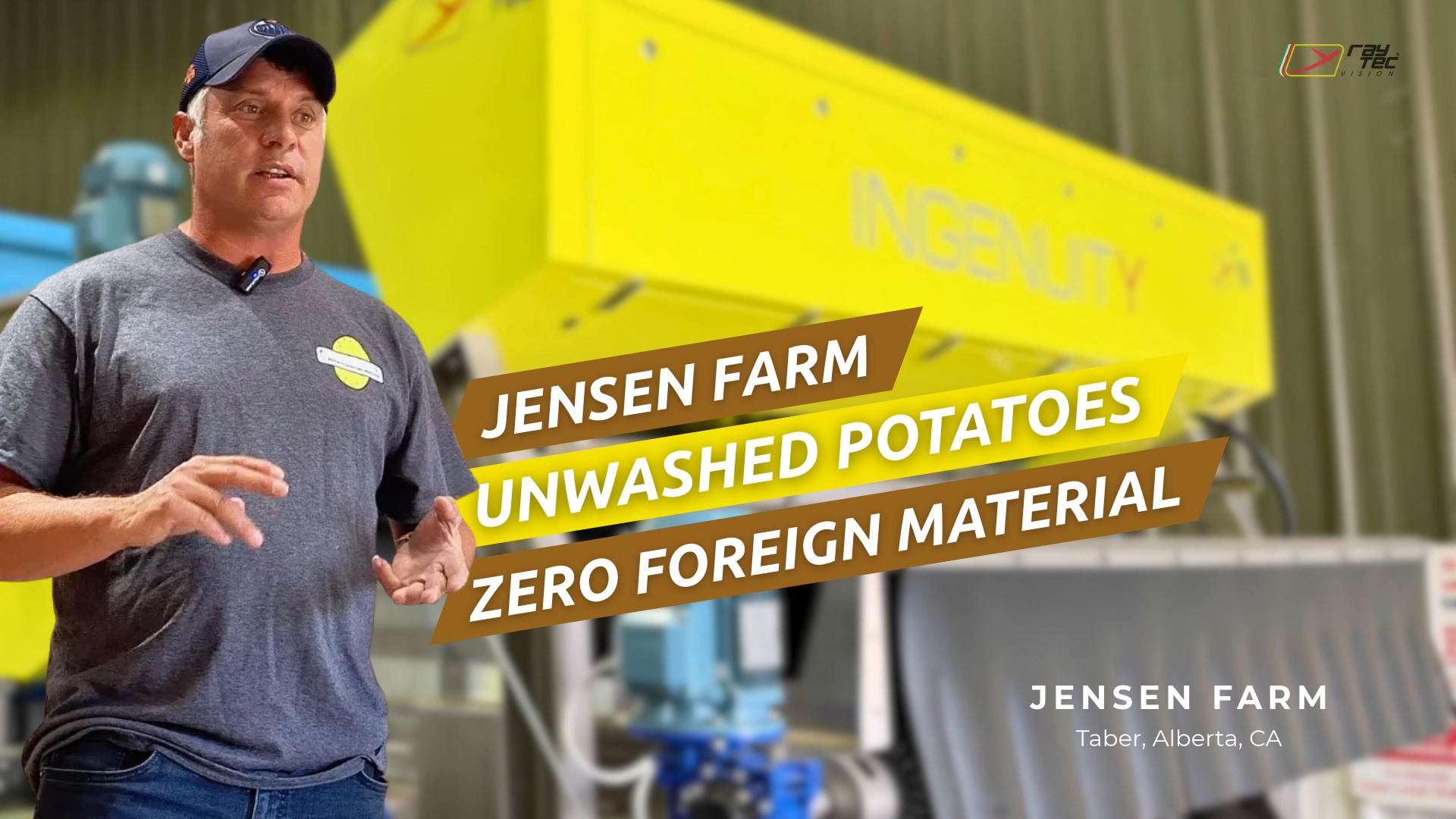
Jensen Farm supplies potatoes to processing plants: rocks, bones and even golf balls among the potatoes, with 12 hours of manual sorting per shift. With Ingenuity, foreign material is removed before it reaches the plant, sorting shifts are much shorter than the 12 hours needed by hand and fewer operators are required.
Read the case study →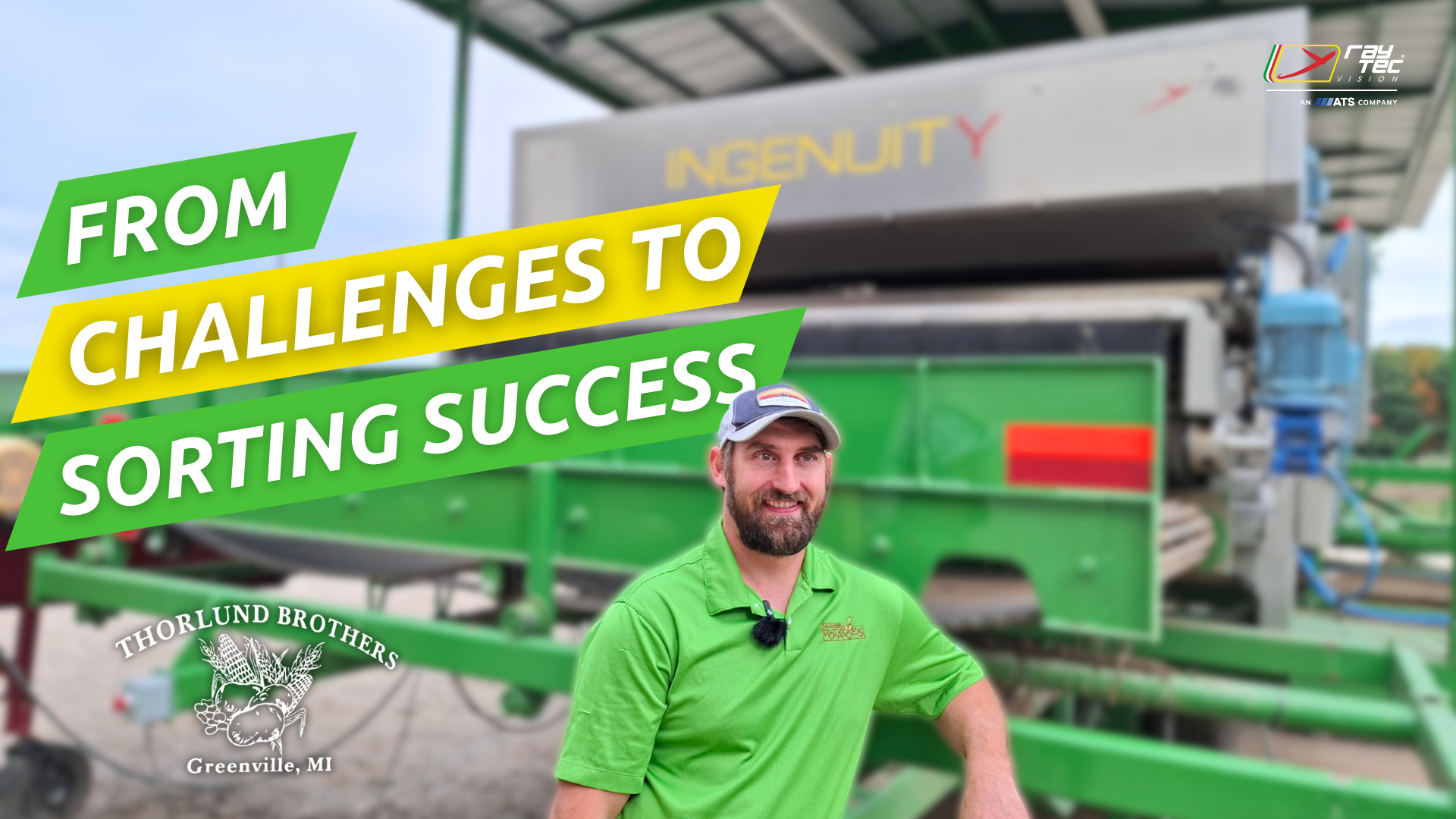
Around 35 million pounds of potatoes a year: Ingenuity removes organic debris, green potatoes, stones and clods and increases sellable product.
Read the case study →Frequently asked questions
With an optical sorter installed on the farm or at plant intake, before storage or processing. Machines such as Ingenuity, which combines colour and NIR cameras, recognise stones, soil clods, golf balls and organic debris and reject them automatically.
On unwashed potatoes the priority is removing foreign material, green potatoes and damaged and cut potatoes; after washing, rot and colour defects also become visible.
Sorters such as Spiryt use deep learning to recognise defects from images of the entire potato surface and adapt to different varieties and quality standards.
Both. On the farm it removes foreign material and defects before storage and delivery; in the processing industry it protects equipment and ensures a compliant finished product.
It depends on the line. At Thorlund Brothers Farms, Ingenuity reduced the labour needed for sorting by 60%, and it can reach up to 90%-95%


